The individual
Continuity across changing needs.
Training, movement guidance and education, with physiotherapy as a future qualified service. A person should be able to understand how the different parts relate to their goals.
Private Health ↗Zacharias Razvi / About ZACH
A body that can meet a demand.
A person with room to live.
I am Zacharias, a physiotherapy student in Copenhagen. My interests in running, strength, rehabilitation and decision-making meet in that question. ZACH is where I am turning those interests into movement guidance, education and a practice built around the person.
The person, the questions, the direction ↓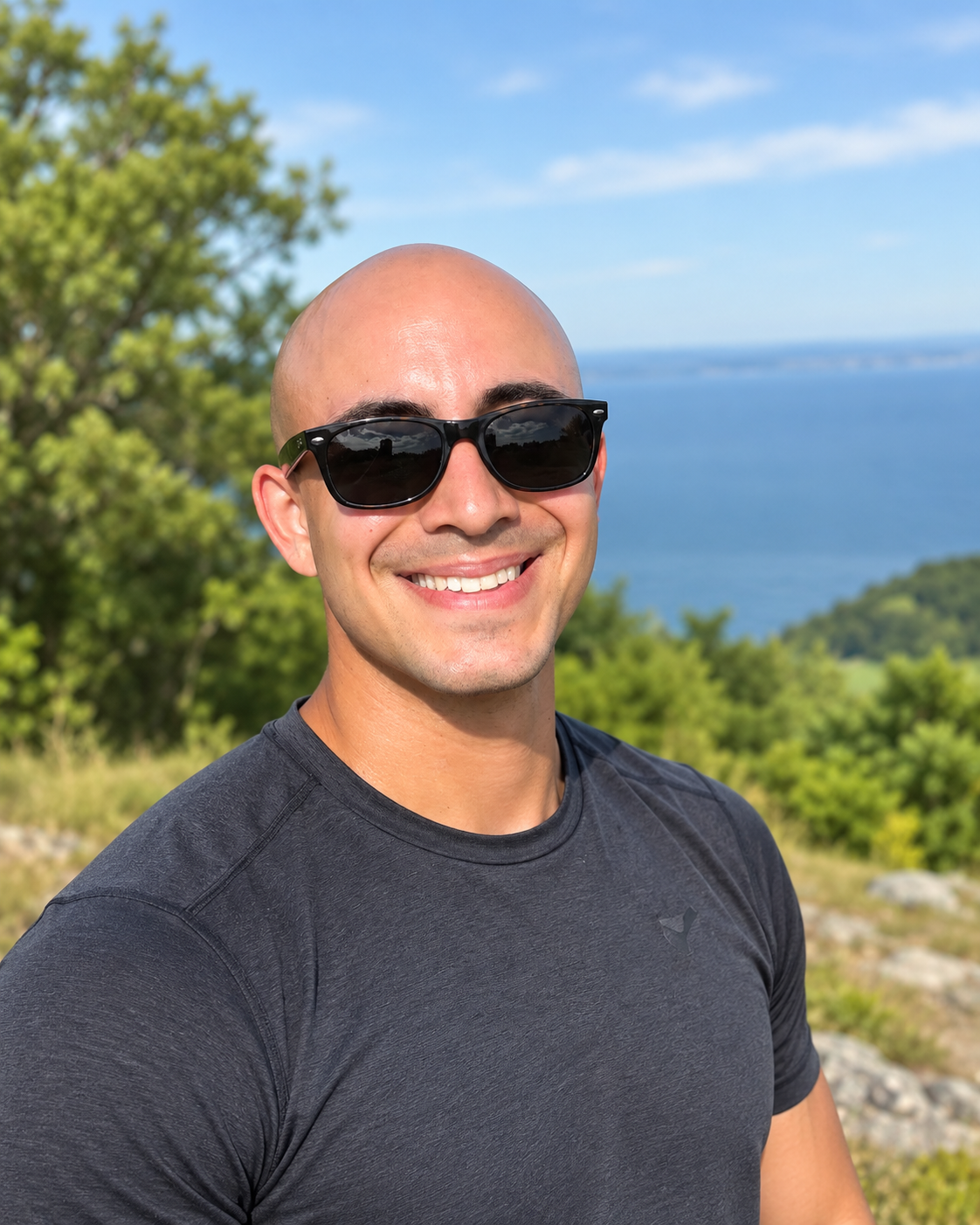
Final-semester physiotherapy student.
Current work: movement, training and education.
01 / The person behind the practice
Running. Strength. Physiology.
Pain. Learning. Decisions.
Different interests, connected questions.
Running and strength training interest me personally as well as professionally. They give quite different expressions to the same question: what are we asking of the body, and what makes it possible to respond?
In strength training, the task can look very clear: a load, a movement, a number of repetitions. Running brings pace, distance, terrain and the judgment of how much effort to spend now and how much to keep for later. Both invite measurement. But a training record only tells part of the story. There is also the person who has to recover, go to work and decide whether the plan still makes sense next week.
That is why my interest extends into physiology, pain and rehabilitation. I want to understand the mechanisms, but also what they mean for someone trying to return to an activity, trust a movement again or build a routine after a long interruption. A technically interesting explanation becomes useful when it changes what a person can understand or do.
Physiotherapy brings these questions together: anatomy and physiology, movement and clinical reasoning, a person's experience and the demands of their life. It gives me a discipline in which to develop those interests — and a reason to keep testing my assumptions.
02 / Why the mountain
From a distance, a mountain looks like a simple instruction: go higher. On the ground, the route is more complicated.
You can reach a ridge and discover that the next summit is separated from you by a valley. Continuing upward from where you stand may lead nowhere. To move towards the place you actually want to reach, you have to give up some height, descend and approach from another side.
The imagined outcome feels compelling.
Starting brings enjoyment and energy.
The task proves less straightforward than expected.
The scale of the commitment becomes clearer.
Doubts now concern your own ability.
Effort has accumulated without the hoped-for result.
There is movement, but it still feels inadequate.
You consider ending the attempt and moving on.
Something prompts a second look.
The work starts to make more sense.
The emerging result brings renewed excitement.
You can appreciate what the effort has produced.
Alongside the route: conviction, continued effort, close relationships and humour.
Further reading: OECD OPSI · Momentum ↗
Story inspiration: Celes / Personal Excellence · The Emotional Journey of Creating Anything Great ↗
An interpretive illustration, not a fixed sequence or a clinical model.
What this means for ZACH / An illustrative situation
There are two statements here. One describes something that happened. The other turns it into a description of who you are. In a conversation about training, I want to understand the first before accepting the second.
Imagine someone who has planned three evening runs. During the first week, one runs late because of work; another clashes with a family commitment. The record now contains one completed session and two missed ones. That tells us something about the arrangement. It tells us very little about what this person could sustain with different timing, a different number of sessions or a different aim.
This is where the mountain becomes useful to me. From the outside, reducing the plan to two runs might look like lowering ambition. Inside this person's life, it could be a more serious attempt to connect the ambition with the time that actually exists. The decision deserves a test: agree the arrangement, see what happens, and discuss both the activity and what it costs to maintain.
The same distinction matters when I am learning. Finding a gap in my understanding does not erase what I already know. It does, however, create a responsibility to investigate the gap before speaking with confidence. In building ZACH, I want the quality of the explanation and the honesty of the service to matter more than the appearance of having every answer.
A person can leave a conversation with a smaller plan and a clearer understanding. That is a meaningful outcome to me. The purpose of the guidance is to help someone make a reasoned choice about their own situation, including recognising when the question belongs with another professional.
Direction is a longer question
than “am I higher today?”
The uncomfortable part is that a descent can look like failure while you are in it. A lighter training week can feel less ambitious. Relearning something can feel less competent than repeating what you already know. Changing a plan can feel less disciplined than following it. I am interested in the judgment required to tell the difference between abandoning something too early and holding on after it has stopped being useful.
That does not make every setback necessary or beneficial. Some losses are simply losses. The mountain is not a promise that everything will work out; it is a way of asking a better question about the next step. What does this situation require, and why would this route help?
It also describes how I want to build ZACH. Completing my education, recognising the limits of my present scope and developing the practice in stages are part of the route. The ambition matters. So does being honest about the ground I am standing on.
The body in the life it belongs to
A heavier lift.
A comfortable walk.
Enough left at the end of the day.
A measure of capacity becomes more meaningful when you know what the person wants to use it for.
One person wants to run further. Another wants the stairs to feel less demanding. Someone else wants to return to an activity without organising the entire week around it. These are different goals. They deserve different conversations, even if some of the exercises look similar.
I think about health through that relationship between capacity, demands and the life around them. Strength and cardiovascular fitness are important parts of the picture. So are movement options, sleep, recovery and the conditions in which a routine has to happen. A plan asks for time, attention and effort; those are real costs, even when the plan is well designed.
This is why movement holds such a central place in my work. It gives us practical choices: a different exercise, a shorter session, a walk, a change of pace, a progression that can be reviewed. It is a place to begin doing something and learning from the response. It cannot, by itself, resolve every difficulty in a person's health or circumstances.
The aim I am interested in is not permanent optimisation. It is useful capacity and a workable relationship with activity: being able to do more of what matters, with enough flexibility that the routine survives an ordinary, imperfect week.
Explore these connections in the Health Map ↗03 / Research & questions
Physical activity → capacity → readiness?
A question to investigate.
Not an effect to assume.
My bachelor work explores how physical activity and physical capacity may relate to decision readiness and decisions under uncertainty.
That interest reaches beyond whether a person knows the right answer. I am curious about the conditions in which they have to think: sleep, stress, attention, the demands placed on them and the uncertainty they have to tolerate. Leadership is one setting in which these questions become especially interesting, because a choice can affect other people and the feedback may arrive much later.
I want to keep the distinctions clear. Being physically active is not the same as having a measured physical capacity. Feeling ready is not the same as making a good decision. A good outcome is not necessarily evidence of a good process. Before connecting these ideas, we need to ask what each one means and how it could be studied.
A question that connects the research to the mountain
The exploration–exploitation dilemma gives that question a precise form. Exploitation means using an option you already know something about. Exploration means trying an alternative to learn what it might offer. The familiar option can be sensible. It can also prevent you from discovering a better one. Exploring can teach you something useful, but it costs time and may give you a worse result now.
For example, imagine a familiar way of organising training that is reasonably workable. Keeping it offers predictability. Trying a different schedule offers information. Whether that experiment is worthwhile depends on how well the current approach works, how much disruption you can accept and how long you have to benefit from what you learn.
This is the connection to the mountain: persistence and reconsideration are both skills. The interesting question is when each is appropriate. It is also why I care about education. Understanding the reasoning behind a plan makes it easier to judge when a change is sensible, rather than treating every adjustment as a failure to comply.
My academic work is an investigation of these relationships. It does not establish that exercise produces better leaders or that ZACH improves business decisions. I want the questions to be ambitious and the claims to remain proportionate to what is known.
Read my Insight: Decision-making under uncertainty ↗04 / Why ZACH exists
An explanation can make sense in a consultation and still be difficult to use on a Tuesday evening.
A person may understand an exercise without knowing how it belongs in their week. They may have a programme but be unsure what to do when their circumstances change. They may find plenty of health information and still struggle to decide which part is relevant to them.
That is the connection I want ZACH to make: between professional reasoning, practical movement and the decisions that happen afterwards. My long-term aim is to bring physiotherapy, training and education into a coherent service. The present foundation is movement guidance, training and education.
Private Health, to me, means knowing the person well enough to make the guidance specific, and maintaining enough continuity to learn from what actually happens. The value is in remembering the context, explaining the choices and agreeing what to revisit.
What would you like to be able to do? What has made it difficult, and what have you already tried?
What does a real week look like? Consider preferences, responsibilities, available time and competing demands.
Establish a relevant starting point within the service's scope. Decide what would be useful to observe or review.
Agree the purpose of the exercises, the schedule and what to do if the week changes. Make the reasoning understandable.
Compare the plan with the experience. Keep what helped and change what did not, with a reason for the next choice.
What continuity looks like / An illustrative example
That is useful information. We would look at what changed before adding more instructions: which sessions remained possible, which felt worthwhile and what now competes for the time. The next version might be shorter, arranged differently or built around a different priority. At review, we can compare it with the earlier version because the conversation has a history.
Explore Private Health ↗Switzerland / An influence with a purpose
My interest in Switzerland is part of the character I want ZACH to have: precise, considered and quietly dependable.
The mountain carries the idea of a route. Swiss design gives that idea a structure: a clear hierarchy, careful spacing and attention to details that make the whole easier to understand. I want the same relationship in the service. A calm experience depends on work being done carefully behind it.
For me, that means explaining what an appointment includes, keeping the price clear, making the next step understandable and paying attention to what a person has already told me. Discretion means that their circumstances receive more attention than the performance of the brand itself.
Copenhagen is my base. Switzerland and the wider DACH region are a long-term interest and a possible direction for ZACH's development. The influence is present in the principles; an international practice has to be built through the work, the qualifications and the relationships that would make it credible.
Learning / Beyond collecting knowledge
I care about how we learn to become health professionals, as well as what we learn. In a 2026 opinion piece in Fysioterapeuten , I wrote about the conditions for learning in clinical education. That concern connects with the rest of my thinking: how do professional expectations account for the fact that people have limits, responsibilities and lives outside the task?
I want to carry that question into my own practice. A standard has to be clear enough to guide decisions, and thoughtful enough to apply to an actual person. Continuing education, academic reading and reflection matter because they should be able to change how I reason — including when that means revising an answer I was previously comfortable with.
Read the published perspective / Danish ↗The longer route
I want ZACH to grow without losing the ability to explain why each part belongs.
Private Health is the foundation. Authorised Private Physiotherapy is a future development after qualification. Executive and Corporate Health bring the same questions into working life; Online Health and Knowledge make guidance and understanding available in other formats.
These are areas for continued development, not a claim that the full vision already exists. The connection is the work: understand the demands, develop useful capacity and make the reasoning accessible.
The individual
Training, movement guidance and education, with physiotherapy as a future qualified service. A person should be able to understand how the different parts relate to their goals.
Private Health ↗The working day
For busy professionals, a structure that respects limited time. For organisations, practical movement and musculoskeletal education that also takes working conditions seriously. The context deserves attention alongside the individual.
Executive ↗ Corporate ↗Access & understanding
Online conversations, clear explanations and tools that help people think through their choices. The Insights are part of this already: a place to explore the questions in greater depth.
Explore the Insights ↗A place to begin
Tell me what matters to you, where you are starting and what the guidance needs to fit around.
That gives us something more useful than an idealised destination. It gives us a starting point for a conversation.
Contact Zacharias ↗